Montessori Glossary: Understanding Montessori Terms and Concepts

Nido: The Nido is a Montessori environment designed for infants, typically from six weeks to 15/18 months, focused on fostering age-appropriate independence and sensory development. The space emphasises nurturing and responsive care in a safe, stimulating setting that encourages motor skills and early socialisation.
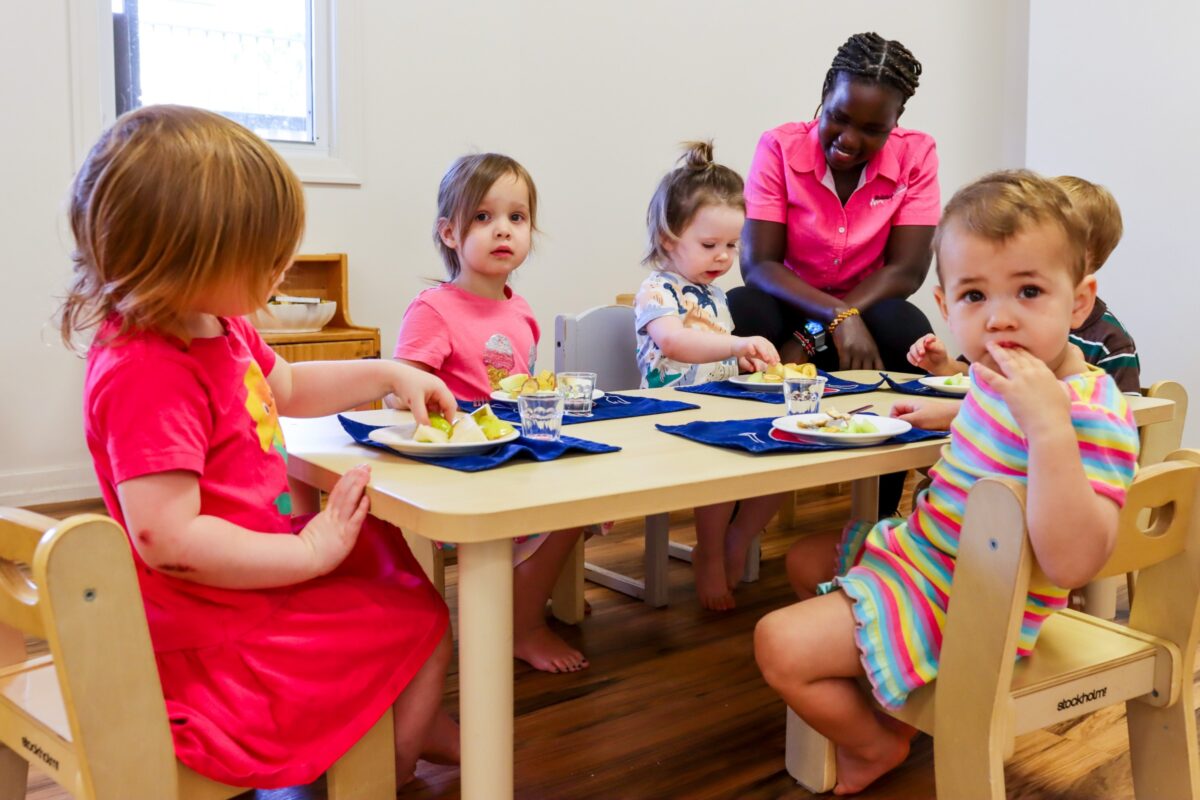
Infant Community: The Infant Community serves children aged approximately 15/18 months to three years, providing an environment that supports physical, emotional and cognitive development through hands-on exploration. The environment fosters emerging autonomy, communication skills and social interactions in a child-centred community-based setting.
Children’s House: The Children’s House is a Montessori classroom for children aged three to six, where they engage in self-directed learning through structured activities and materials that encourage independence and critical thinking. It focuses on the refinement of skills and learning, social, and emotional development with children working both individually and in groups alongside a trained Montessori Educator.
Montessori Educator (Guide/Directress): The role of the Montessori Educator is to observe, guide and support children’s learning rather than direct it – unlike traditional educational settings. The Guide facilitates exploration of the world and provides appropriate resources at the right time.
Absorbent Mind: The concept that young children have a remarkable ability to absorb information from their environment, particularly from birth to age six. During this period, they unconsciously acquire language, behaviours, and cultural norms.
Mixed-Age Grouping: In Montessori settings, children of different ages work together. This allows older children to mentor younger ones and fosters a sense of community and collaboration. At Building Futures Montessori, we have three age groupings: Nido, Infant Community, and Children’s House.
Prepared Environment: A classroom or learning space that is tailored to meet the developmental needs of children. It includes age-appropriate materials, furniture, and activities that encourage exploration and autonomy.
Child-Led Learning: In Montessori education, each child’s learning is tailored to their unique developmental needs, interests, and pace, rather than following a standardised curriculum for the group. Rather than running by a pre-determined schedule/plans, at Building Futures Montessori we follow the needs of the child on a day by day basis, forming what our focus will be on any particular day.
Montessori Materials: Specially designed, hands-on materials that teach specific concepts or skills. These materials are self-correcting and allow children to explore and learn independently.
Work Cycle: The uninterrupted period of time in which children engage in self-chosen activities. Typically lasting 2-3 hours, the work cycle allows children to concentrate deeply on their tasks.
Practical Life: Montessori activities focused on developing independence, coordination, and concentration. Tasks like pouring, sweeping, and buttoning are designed to teach everyday life skills.
Grace and Courtesy: A set of social skills and behaviours that foster respect, politeness, and cooperation. Children are taught how to interact with others, such as saying “please” and “thank you,” waiting their turn, and moving carefully in the classroom.
Sensorial: Montessori materials and activities that engage the senses (sight, sound, touch, smell, and taste). These materials help children refine their sensory perception and develop cognitive skills.
Mathematics: Montessori materials for mathematics are designed to help children understand abstract concepts through hands-on learning. These materials enable children to manipulate numbers and explore mathematical operations.
Culture (Sciences and The Arts): In Montessori, culture refers to the study of geography, history, art, music, and social studies. This approach provides children with a holistic understanding of the world and human civilisation.
Freedom Within Limits: The Montessori principle that children are free to choose their activities and work at their own pace, but within a structured environment with clear boundaries and expectations.
Self-Directed Learning: A core principle of Montessori education, where children take responsibility for their learning, guided by their interests and developmental needs, with support from trained educators.
Sensitive Periods: Specific times in a child’s development when they are especially receptive to learning certain skills or concepts. These periods vary for each child and may include language development, motor skills, or social behaviours.
Cosmic Education: A Montessori concept that teaches children about the interconnectedness of all things in the universe. It includes subjects like geography, history, science, and the environment, fostering a sense of wonder and global awareness.
Respect: A fundamental principle in Montessori education that emphasises honouring the child’s feelings, choices, and developmental process. It encourages educators to listen to children and trust them as capable learners.
Control of Error: A feature of Montessori materials that allows children to self-correct their mistakes. This promotes independence, problem-solving, and confidence in learning.
Isolated Skills: Skills or tasks in the Montessori environment that are broken down into simpler components, allowing the child to master each step individually before progressing to more complex tasks.