The Art of the Unrushed Meal

In a world that never seems to slow down, mealtimes are often rushed, chaotic and sometimes feel like something we just try to get through. We eat in the car between after school sports, we throw dinner in the airfyer while answering the last of the emails and we are often guilty of scrolling on our phones between bites.
But what if meals could be something more? Something far more calming and deeply connective?
In Montessori classrooms, the daily rhythm of meals is seen as an opportunity for growth, not just a chore. It is a chance for connection with children after a busy morning during workcycle, and an opportunity for an unrushed conversation. Children are not only invited to eat; they are encouraged to take part in the whole process, from setting the table to cleaning up. It is not about perfection; it is instead about presence and being part of a community.
Why mealtimes matter more than ever
For many families, dinner might be the only time of day everyone is in the same room, especially as our children become older and busier with after-school activities. But even then, it is easy to let distractions creep in. Screens, stresses from the day and conflicting schedules can turn what should be a moment of calm into just another thing on the to-do list.
Maria Montessori illustrated to us that children thrive on rhythm and connection. Mealtimes offer both. They provide a natural pause in the day as a chance to come together and share stories of what we experienced during the day. And it does not just benefit children; we adults need this pause and connection too. The simple act of sitting down and eating slowly, side by side with our loved ones, builds emotional safety and a stronger family unit.
Practical Life: including the child
In a Montessori environment, we talk a lot about Practical Life. These are the real-world tasks that help a child develop coordination, independence, and a sense of belonging. Mealtime is the ultimate Practical Life activity.
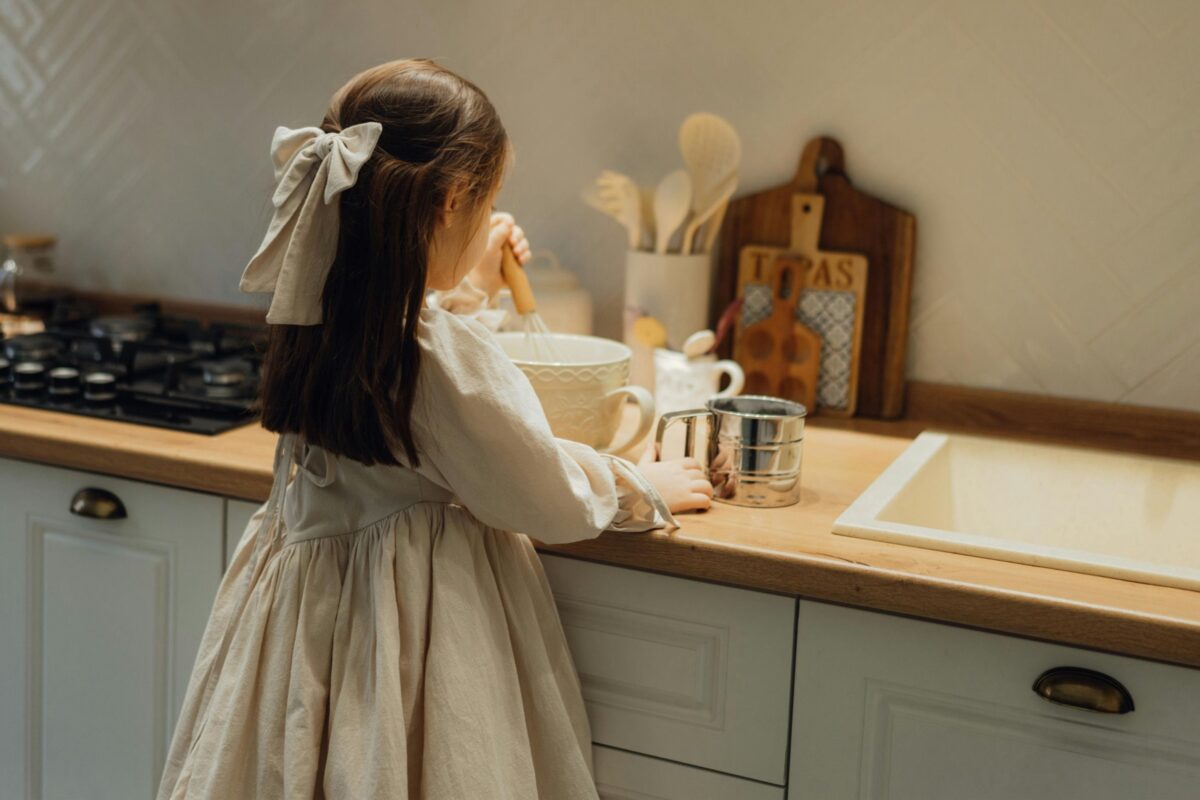
Instead of seeing a child in the kitchen as a “hindrance” to getting dinner on the table, try to view them as a capable contributor. Even a toddler can carry cups to the table or pour water from a small jug. An older child can peel a carrot, snap the ends off beans, or choose which tablecloth to use before setting the table. When children help prepare the meal, they are more likely to respect the food and stay at the table longer because they have a personal stake in the result.
The “Grace and Courtesy” of the table
Montessori also emphasised the importance of Grace and Courtesy. These are the social skills that allow us to live harmoniously with others. At the table, this looks like learning to wait until everyone is served, saying “please” and “thank you,” and learning the art of conversation and listening whilst others speak.
Children learn how to listen, how to take turns speaking and how to care for others by watching us. These things do not need to be formally taught through lectures; they are learned through repeated experience and shared life.
Tips for maintaining mindful mealtimes
- The “no-phone” zone: Create a physical boundary for devices. Placing phones in a basket away from the table signals to everyone that the people in front of us are the priority.
- Focus on the senses: Encourage your children to talk about the food. What does the bread smell like? Is the soup crunchy or smooth? This grounds everyone in the present moment and provides a conversation starter.
- Keep it simple: A mindful meal doesn’t have to be a four-course dinner. Even a simple bowl of cereal in the mornings can be a “slow” meal if the atmosphere is calm.
- The ritual of cleanup: The meal isn’t over when the last bite is taken. Including children in clearing the plates and wiping the table provides a sense of closure and teaches responsibility for our environment.
A gift of time
Childhood isn’t something to be rushed or filled with entertainment. It is a time for wonder and real work with real things. By slowing down our meals, we give our children something far more valuable than a quick snack time fix; we give them our presence.
So, tonight, try to take a breath. Light a candle, put away the screens, and let the meal take as long as it needs to. You might find that the best part of your day happens between the bites.