If you’ve begun researching early education options, you’ve probably come across Montessori and wondered how it compares to a more traditional early childhood setting. At first glance, they might seem similar to children learning, teachers guiding, and toys on shelves, but the experience can feel very different.
So, what is the actual difference between Montessori and traditional education? And why does it matter in the early years?
Let’s break it down in simple, parent-friendly terms.
The Basics: What Defines Each Approach?
Traditional early childhood education (in play-based long day care or kindergarten programs) often follows a more structured, educator-led model. Educators plan lessons or themes, and all children generally participate in the same activity at the same time. There may be group mat times, set art projects and a routine designed for the whole class.
Montessori education, developed by Dr Maria Montessori over a century ago, is centred around the idea that children learn best when they are free to choose, move and explore within a classroom which we call a prepared environment. The educator’s role is not to instruct in the traditional sense, but to guide, observe and support the child’s individual learning journey.
The Role of the Educator
In a traditional setting, the Educator often directs the learning. They decide what’s being taught, how long the activity lasts, and how it’s completed. Children are expected to keep up with the group and follow the instructions given.
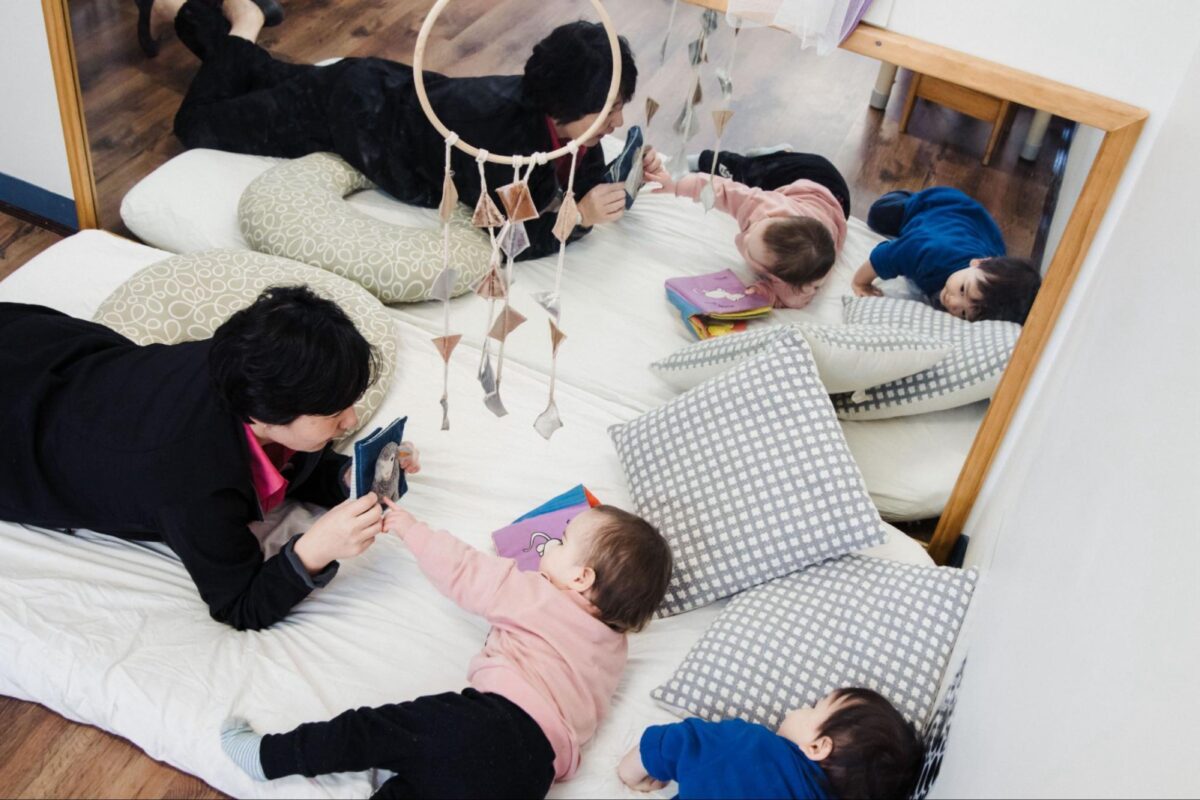
In Montessori, educators (also known as “guides”) take a step back. Their role is to observe the child closely, introduce activities one-on-one when the child is ready, and then allow them the space and time to work independently. The focus is on nurturing curiosity and supporting a child’s natural development, rather than delivering set lessons to a group.
Learning Through Choice
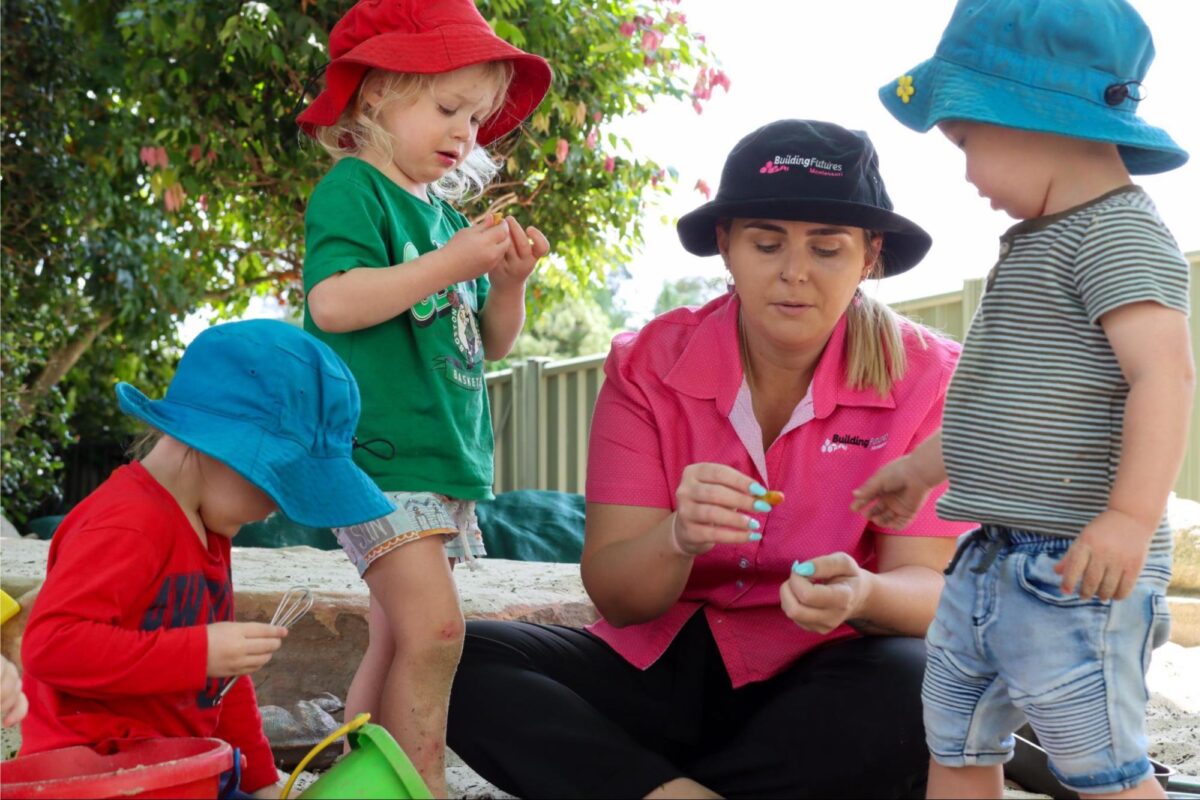
In traditional settings, many activities are group-based and often planned around a weekly theme (e.g., “animals of Australia” or “weather”). Children might create similar artworks or work on the same alphabet letter at the same time.
In Montessori, the curriculum is child-led. Children are free to choose from a range of prepared activities that support their developmental stage. This doesn’t mean there’s no structure; it’s actually quite the opposite. The environment is intentionally designed with specific materials that encourage everything from practical life skills to early maths and language.
The key difference between the two? Children in Montessori aren’t pushed to do something they’re not ready for, and they’re not held back if they’re ready to move forward.
Independence in Action
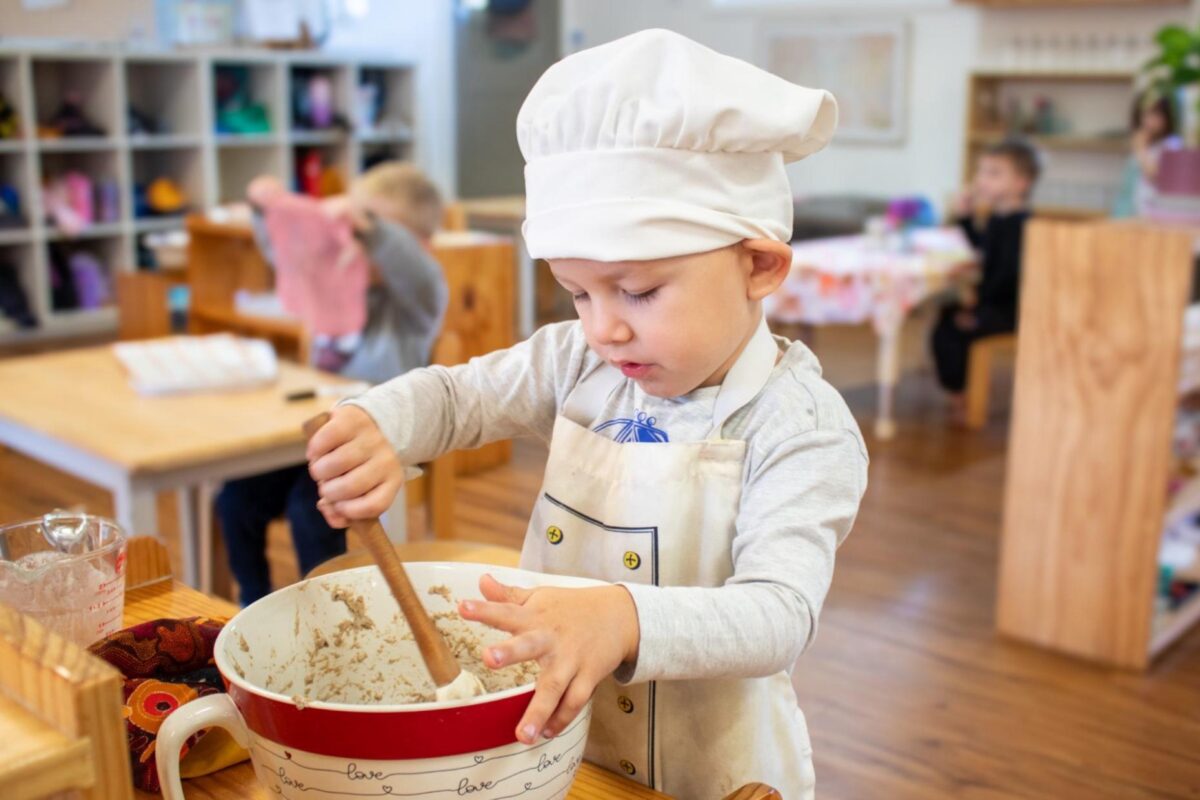
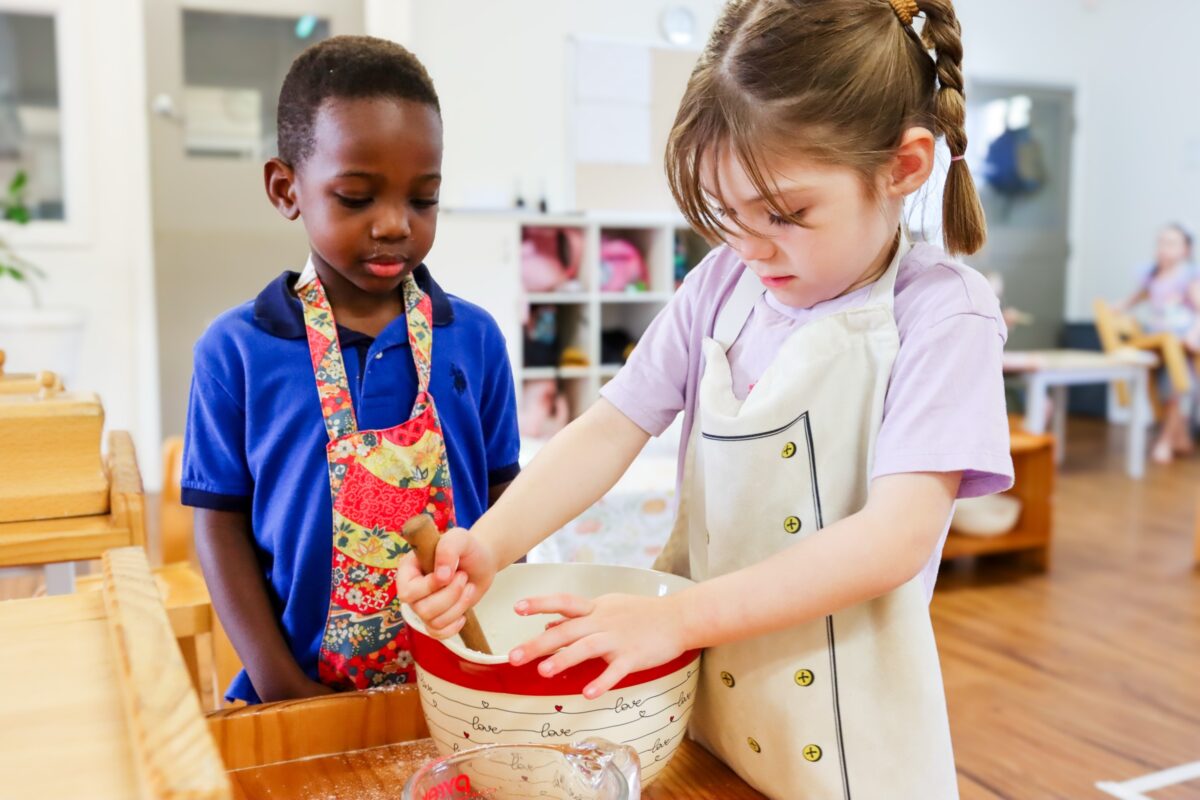
In the early years, a major focus of Montessori is independence. Children are encouraged to pour their own water, tidy their own space, care for plants, prepare snacks and meals, all with real child-sized tools in a space designed for their success.
In traditional settings, children might be more passively involved. An adult often does things for the child in the interest of speed or convenience.
The Montessori belief is that children build confidence and capability through doing.
The Environment
Montessori classrooms (the prepared environment) are calm, beautiful and orderly. Everything in the environment has its place, and materials are displayed on open shelves within easy reach of children. Items are made of natural materials like wood, glass and metal where possible, creating a sense of respect and real-world connection.
The environment is considered the “third teacher,” carefully curated to invite focus and purposeful activity.
Traditional classrooms can often be more colourful, with bright posters, plastic toys, and lots of group seating. While often warm and fun, they can sometimes be overstimulating for some young children.
Social Development
In a Montessori classroom, social development is nurtured through intentional, mixed-age environments where children learn from and with each other. Children engage in collaborative work and unstructured social interactions that foster empathy, cooperation and communication. Grace and courtesy lessons, practical demonstrations of respectful behaviour, are an important part of the curriculum, helping children learn how to navigate social situations with kindness and confidence. Educators observe and guide rather than direct, allowing children the time and space to resolve conflicts, express themselves, and build meaningful relationships at their own pace. This respectful and community-oriented approach lays a strong foundation for lifelong social skills.
Does That Mean Montessori Is Better?
Not necessarily better, just different. The right setting depends on your family’s values, your child’s needs and what kind of environment you feel will help them thrive.
If you value independence, calm environments, and child-led learning, Montessori might be a great fit; however, what matters most is that the adults working with your child are respectful, responsive, and committed to supporting their development with care.